


USSSA
Automated tournament scheduling for the world’s largest multi-sport athletic association — 8,000+ weekend tournaments a year, planned without the manual chaos.
Scheduling 8,000 tournaments without the chaos
USSSA — the world’s largest multi-sport athletic association — was scheduling its baseball tournaments by hand: slow, error-prone and full of conflicts. In 45 days I designed an event-management platform that turns manual scheduling into an automated, constraint-aware flow — from venues and teams to brackets and final scores.
Manual scheduling at national scale
Every tournament meant juggling team preferences, venue availability and travel logistics by hand. The result: wasted fields, schedule conflicts, and changes that never reached teams and fans in time.
An engine that plays the fixtures for you
Organizers feed in constraints — teams, venues, travel — and the platform generates optimized, conflict-free schedules, pushes real-time updates to every stakeholder, and stays simple enough for non-technical volunteers.
The scale on the board
A volunteer, nonprofit sports governing body running competition across the US, Puerto Rico, US military bases and Canada.
Where matchdays broke down
Interviews and research with organizers, teams and fans kept flagging the same four fouls in the manual process.
Manual scheduling ate the season
Building schedules by hand was slow and error-prone — organizers spent their energy on spreadsheets instead of the event.
No optimization, constant collisions
Without optimization, team schedules clashed and venues sat under-used — suboptimal use of every resource the league had.
Preferences, venues, travel — all juggled by hand
Team preferences, venue availability and travel logistics all constrain each other — and a human can only hold so many in their head.
Changes never reached the field
When schedules shifted, teams and fans found out late — a communication gap that turned small changes into matchday dissatisfaction.
The referee’s call: the league needed an automated scheduling engine — one that absorbs the constraints, and keeps organizers in control of the game.
The organizer’s card
Season goals
- An automated flow that streamlines the whole scheduling process.
- Clear communication and flexible schedules that respect team preferences.
- Up-to-date schedules that fans can actually plan around.
Pain points
- Coordinating multiple teams, venues and schedules at once.
- Last-minute changes — team availability, weather, schedule shifts.
- Carrying the logistics of a national event with manual tools.
The winning conditions
What the platform had to deliver — each condition drawn straight from the research.
Conflict-free schedules, generatedThe engine takes team preferences, venue availability and travel — and returns an optimized fixture list.
beats Foul 01 & 02Changes reach everyone, instantlyReal-time updates and notifications for organizers, teams and fans — the moment anything shifts.
beats Foul 04Usable by volunteersNon-technical organizers run the whole flow without training or a manual.
no specialists neededOne platform for the whole operationVenues, events, officials and teams — managed where the schedule lives.
beats Foul 03Four plays carried the design
Feed the engine the constraints
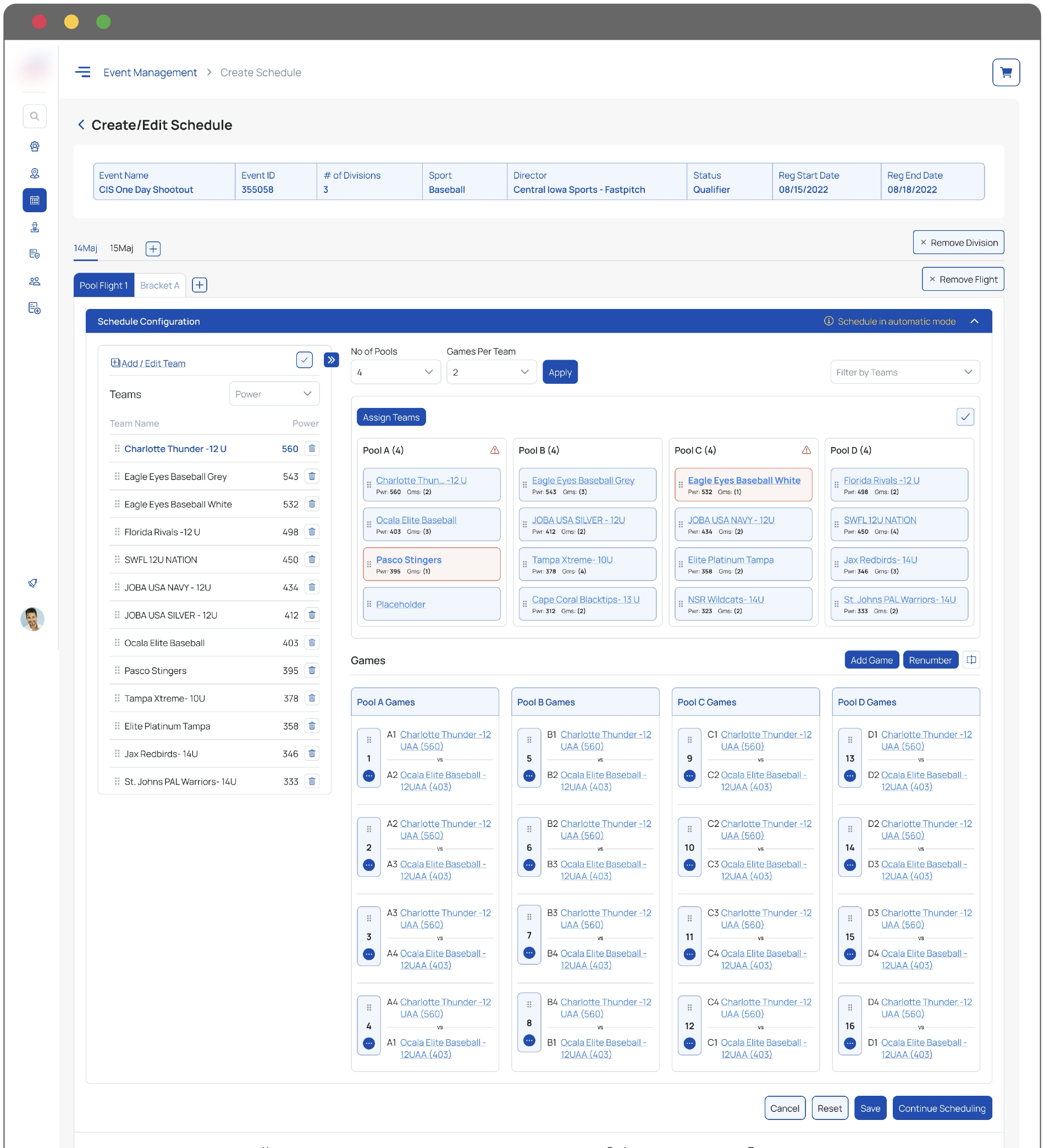
Preferences, venues and travel limits go in once — the algorithm returns the optimized, conflict-free fixture list. The human sets the rules; the engine plays the games.
Broadcast every change
Real-time updates and notifications reach every stakeholder the moment a schedule shifts — weather calls and drop-outs stop being a phone-tree problem.
Keep it volunteer-proof
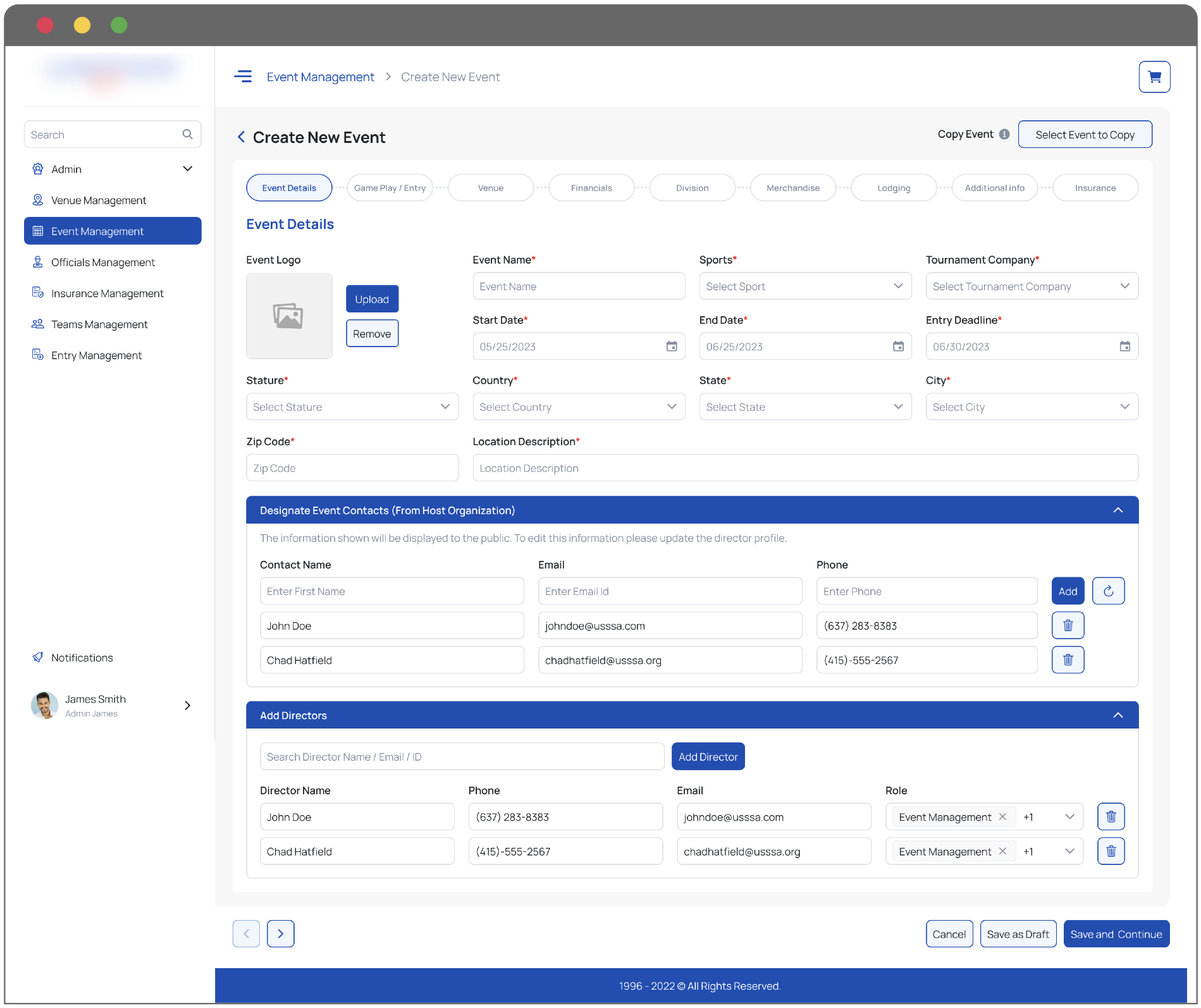
Guided creation, sensible defaults and recoverable edits — designed so a non-technical organizer never needs a specialist at their shoulder.
One clubhouse for everything
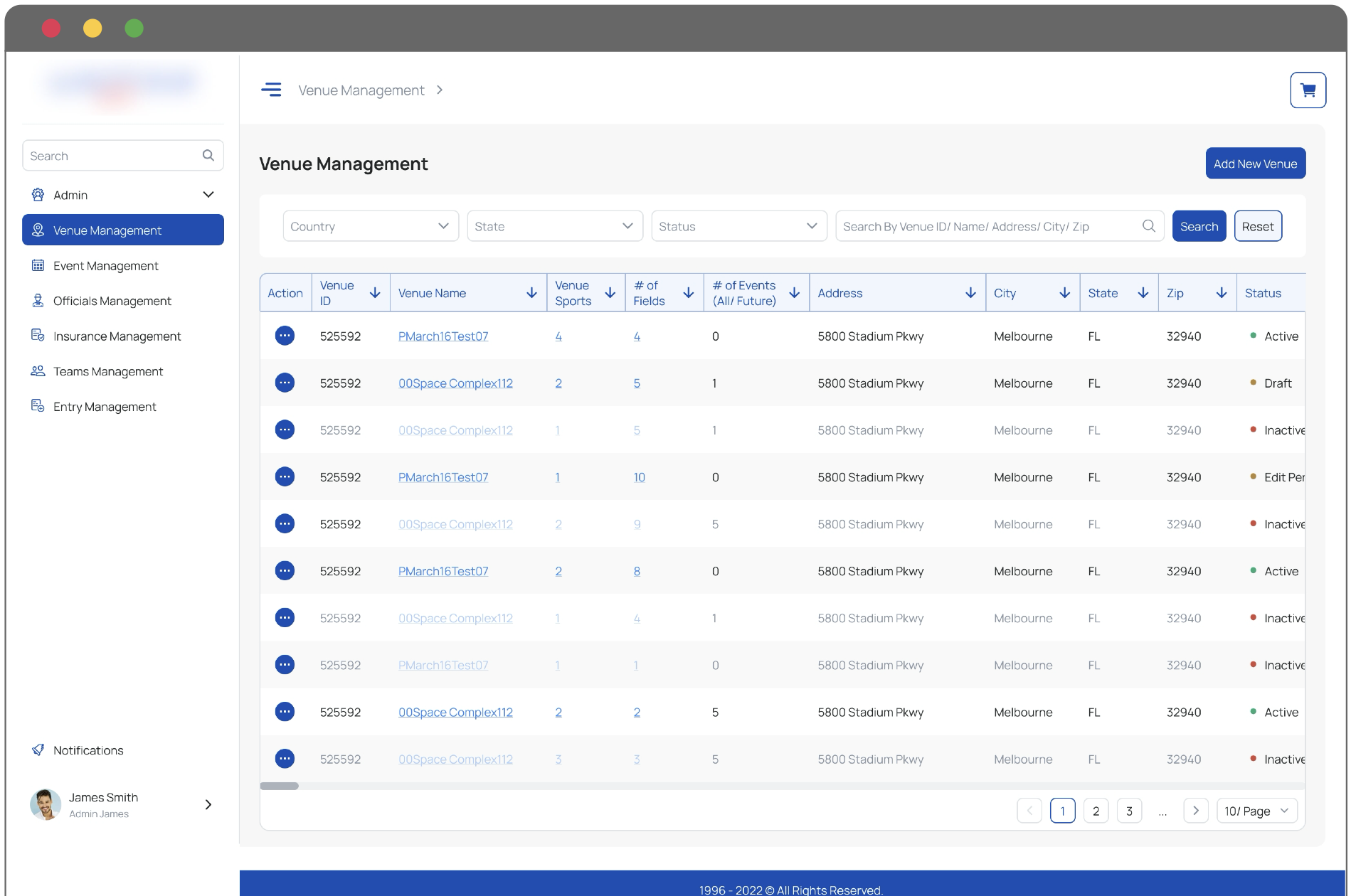
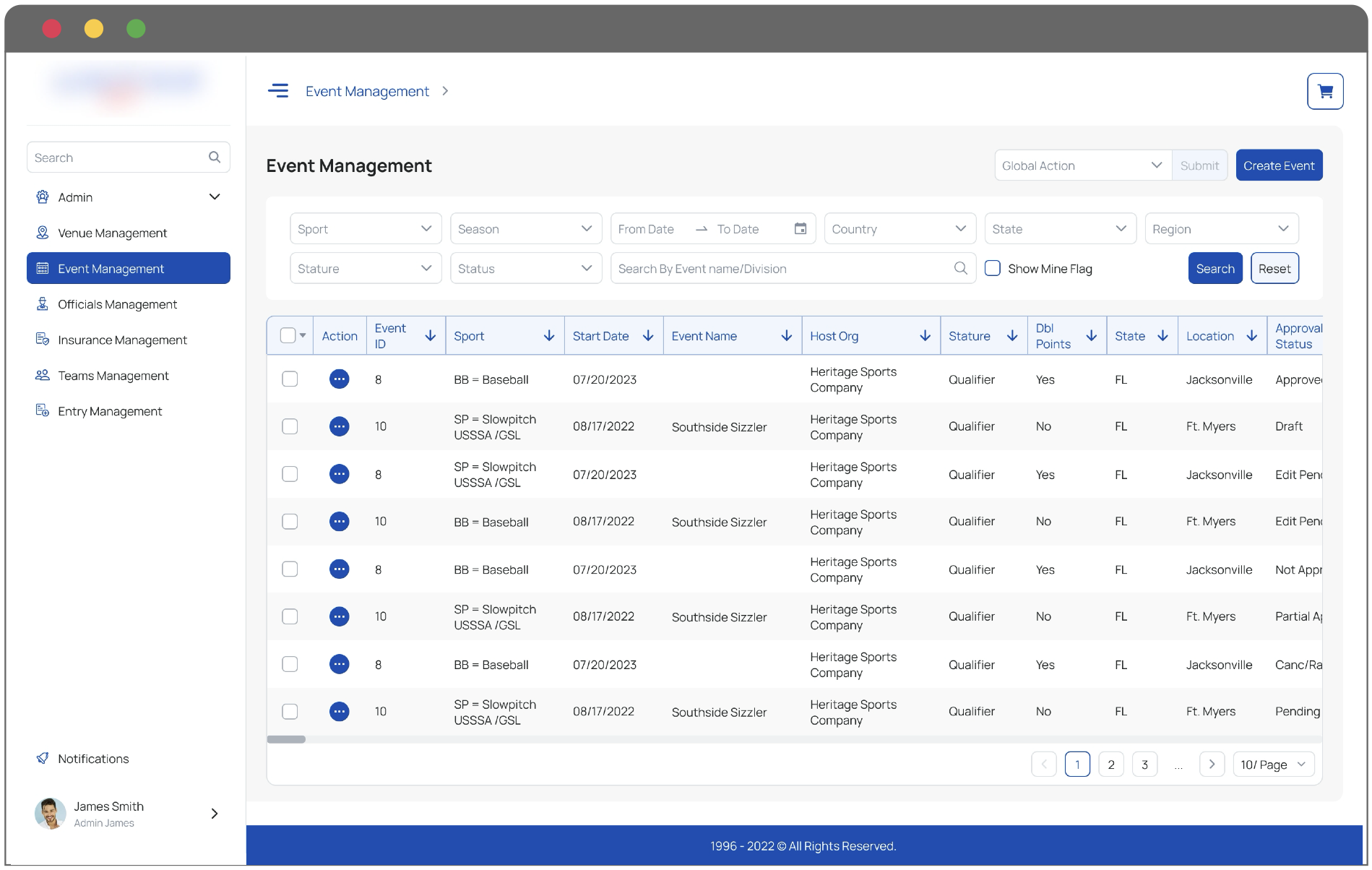
Venues, events, officials and teams live in one system — the schedule always works from live data, not a copy of a copy.
How the platform lines up
Four operations feed the event hub — and everything advances to the schedule, like a bracket.
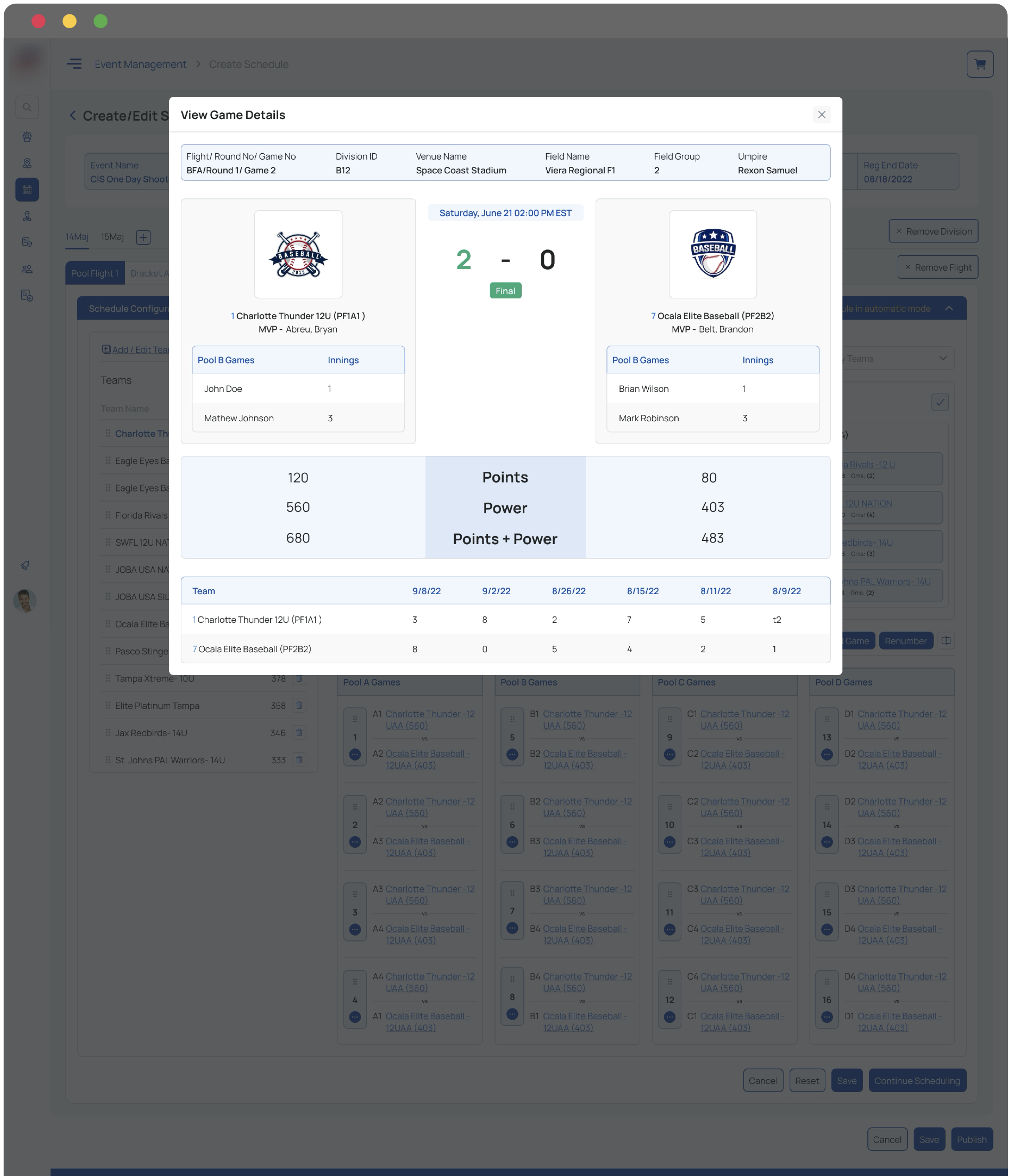
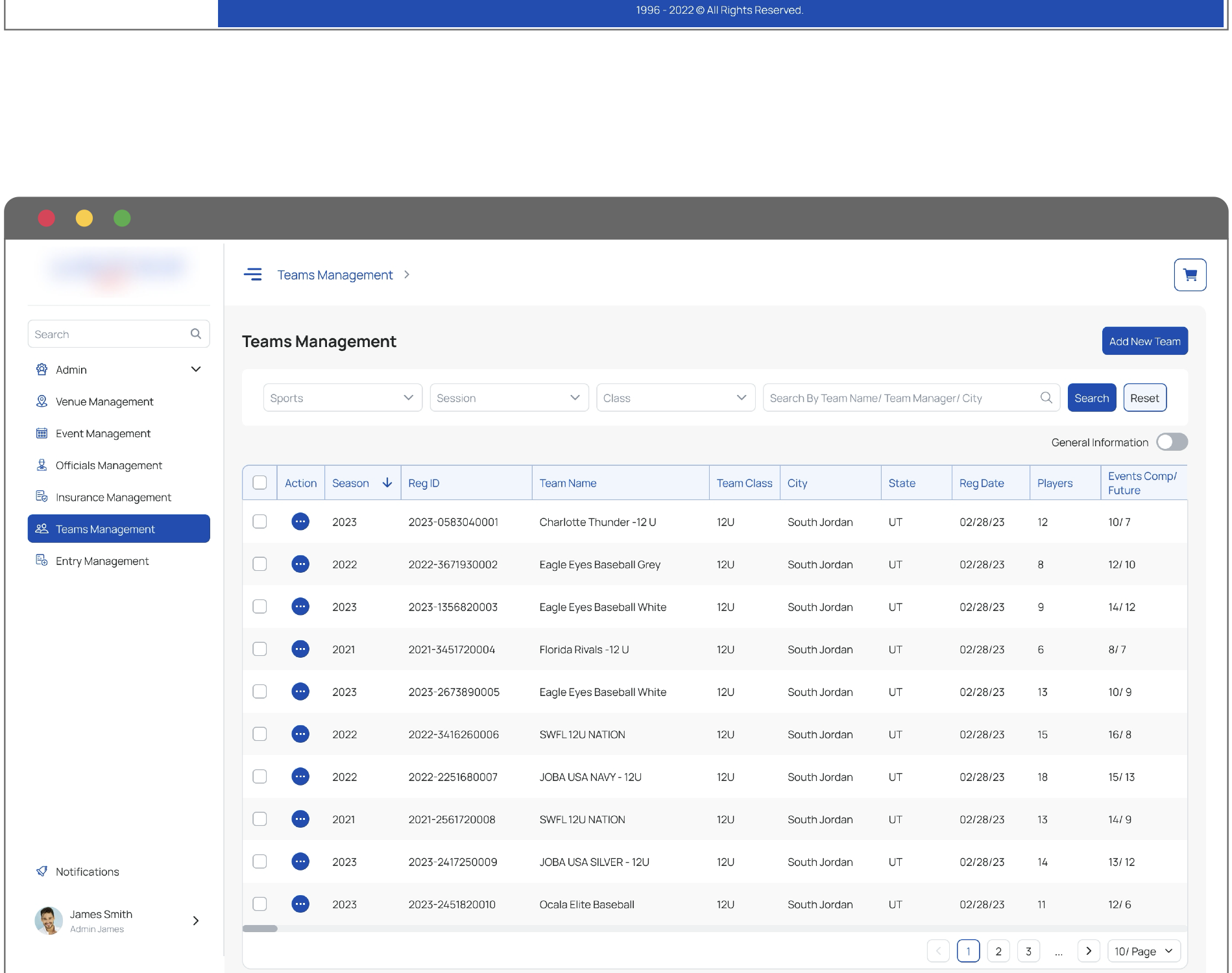
Six screens from the season
A walk through the shipped platform — use the arrows to move between screens.
Sent to the replay booth
What we measured
Effectiveness, efficiency and satisfaction of the scheduling flow — with representative organizers, captains and fans at the controls.
What happened next
Findings went straight back into the design — changes implemented and re-tested in subsequent rounds before the official launch.
The standard
Continuous improvement until the flow felt effortless for a volunteer — not just acceptable for a power user.